
As we pondered together previously – how are we support the chid’s development by offering them a diversity of Christian art and music. Let’s shift to the practical what and how.
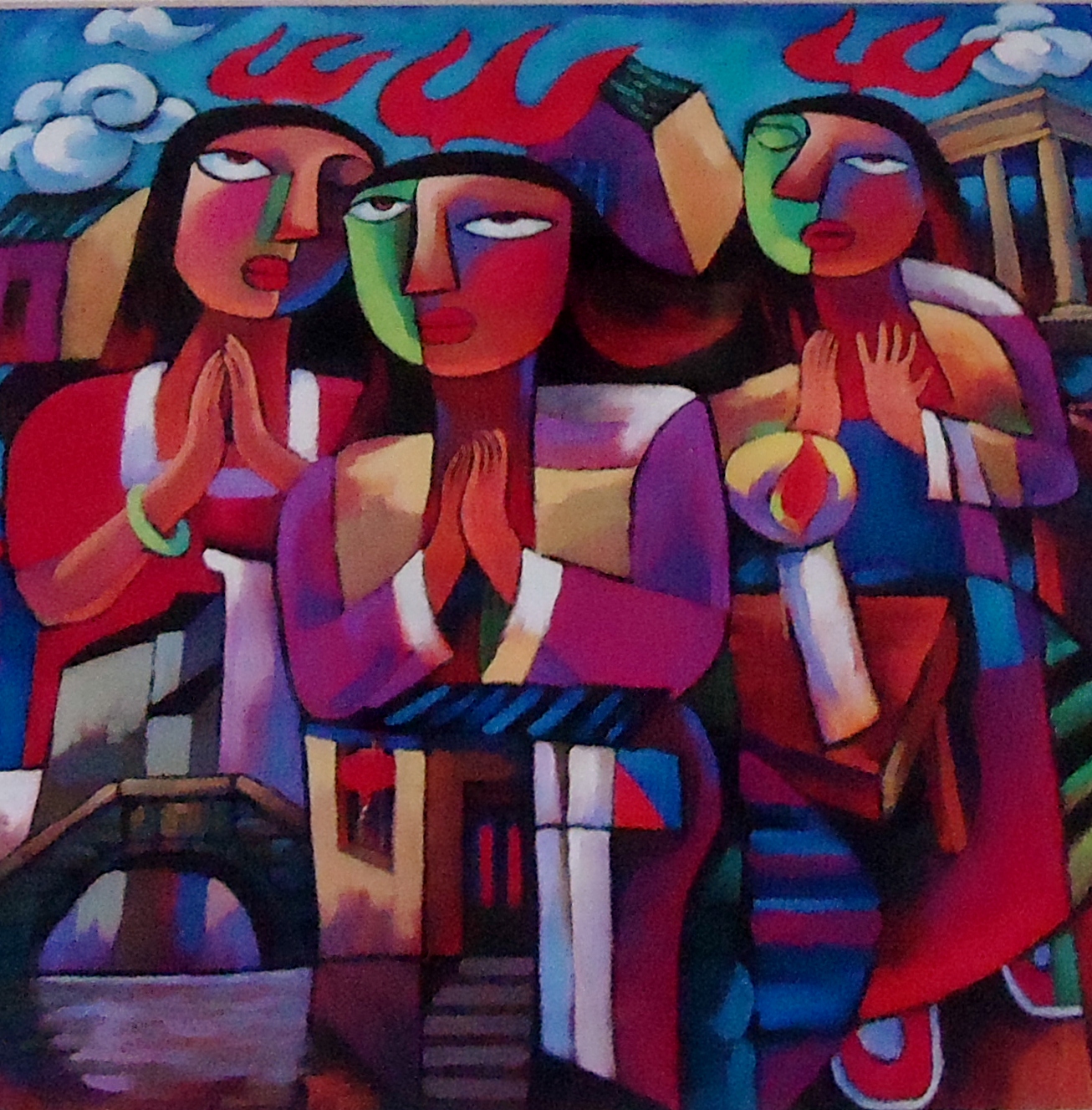
How do I Select an Image?
We are very careful when selecting art that we focus on the central points of the Christian message in the lesson we are illustrating. Do not choose an image that uplifts aspects of the narrative which are not being emphasized. (This can be tricky.) Also, word-centered art is more oriented to the prayer table or for illuminated manuscript tracing in the elementary atria.
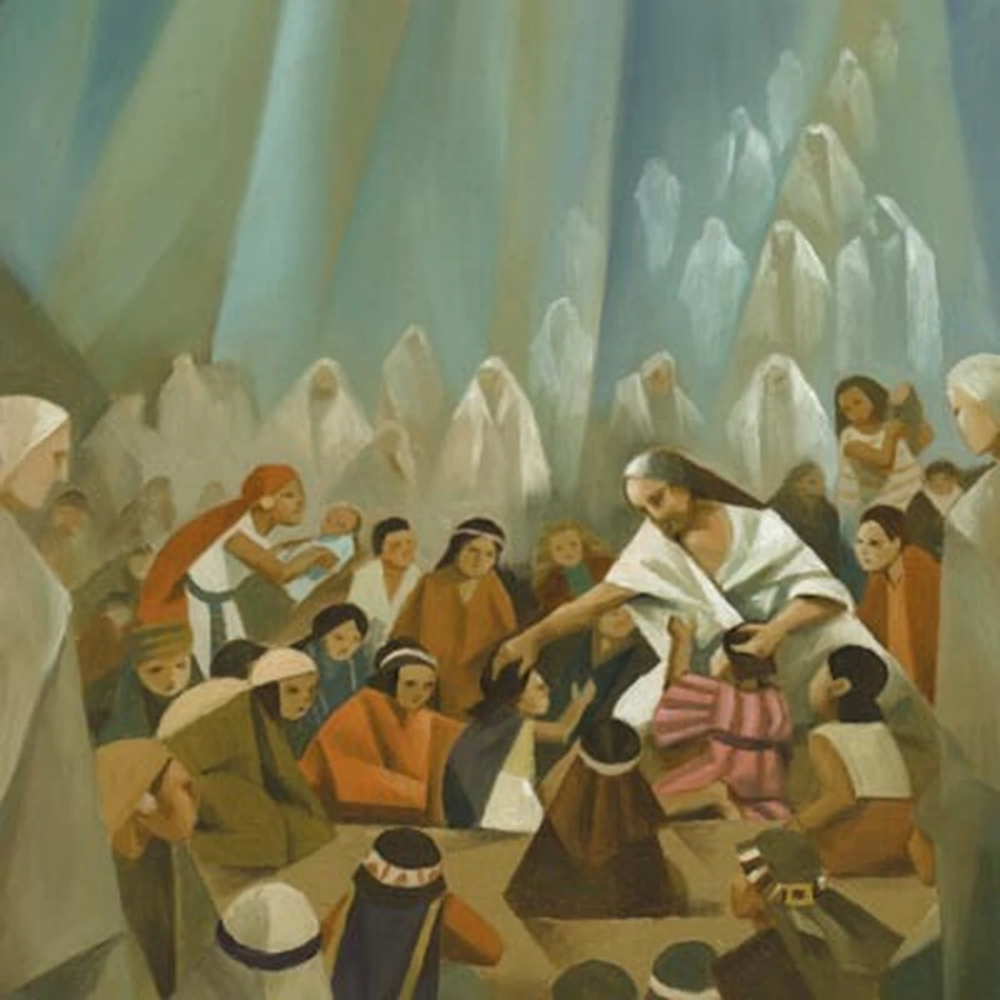
The only exception we make is for a single artwork in the room which calls to the bend of the child in their stage of development. For the 0 to 3 child the have this image of Jesus blessing children uplifting God’s value of love for children; For the 3 to 6 child we have a photo of a lit Paschal candle uplifting the gift of the Light indwelling us. For the 6 to 9 child we have found an image of the the healing of the blind man uplifting how God’s Kingdom cares for others elicits connections with the maxims and their own blank page. Wheel for the 9 to 12s the peaceable kingdom imagery spurs them on to preserver with joy.
One other consideration of art in the atrium is broader than ethnic, cultural, and era. It brings us to the topic of disability and difference. There are few historic pieces which show disability as acceptable and not just something to be healed or a sin to be set aside. This hole in fine art makes it hard for a catechist to allow a disabled child to see themselves positively in the history of the Kingdom of God. Often I will see work by modern artists who are disabled to allow conversations to arise.
How do I Find Diverse Art?
Today, we have unparalleled access to artwork from any point in history and from almost anywhere in the world. This allows us to easily find fine art for the atrium.
- Google “fine art painting [narrative] [location]” (i.e.: fine art painting annunciation Asia).
- Choose “images” under the search bar.
- Choose “tools” and choose size: “large” (to have a 5 x 7 clean image, one of the numbers under the image should be larger than 700).
- Search through at least the first three Google pages to locate suitable images. Make sure the image does not have a watermark (words embedded in the image).
- Save the image, size to your frame, and print.
There are several curated websites which specialize in Christian art. They are often subsidized by a grant and may cease to exist when the grant ends. Links do not equate with endorsements of all the site’s contents.
- Artway
- Cultivated Learning
- Art & Theology
- Christian Art (subscription)
- Asian Christian Art Association
- Curious Christian
How You Keep Track of Images?
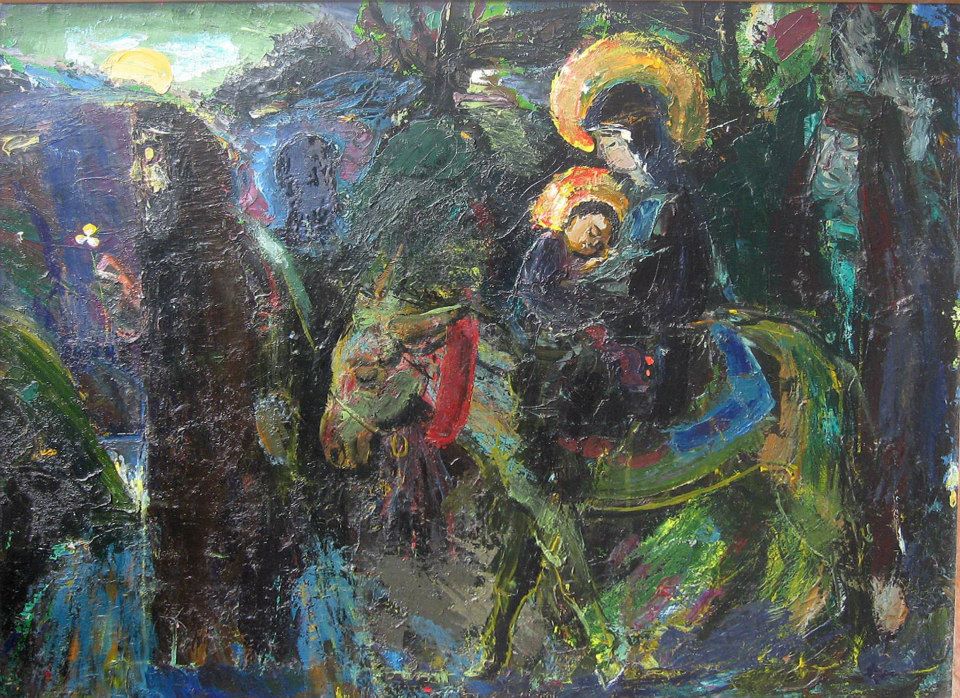
Our atrium has a Google file folder of fine art broken down by subject matter (Annunciation, Madonna and Child, Resurrection, etc.) we then list country or continent and then artist name.
If we’ve printed it, we have a them filed by season or atrium category.
If known, write the title of the work, the artist’s name, country of origin, and date of the work on the back. For Elementary children, this is a point of interest.
How Do I Display the Art and How often to Rotate Them?
Often we use acrylic picture frames on the top of our shelves. They facilitate easy changing for the 5×7 or 8×10 art.
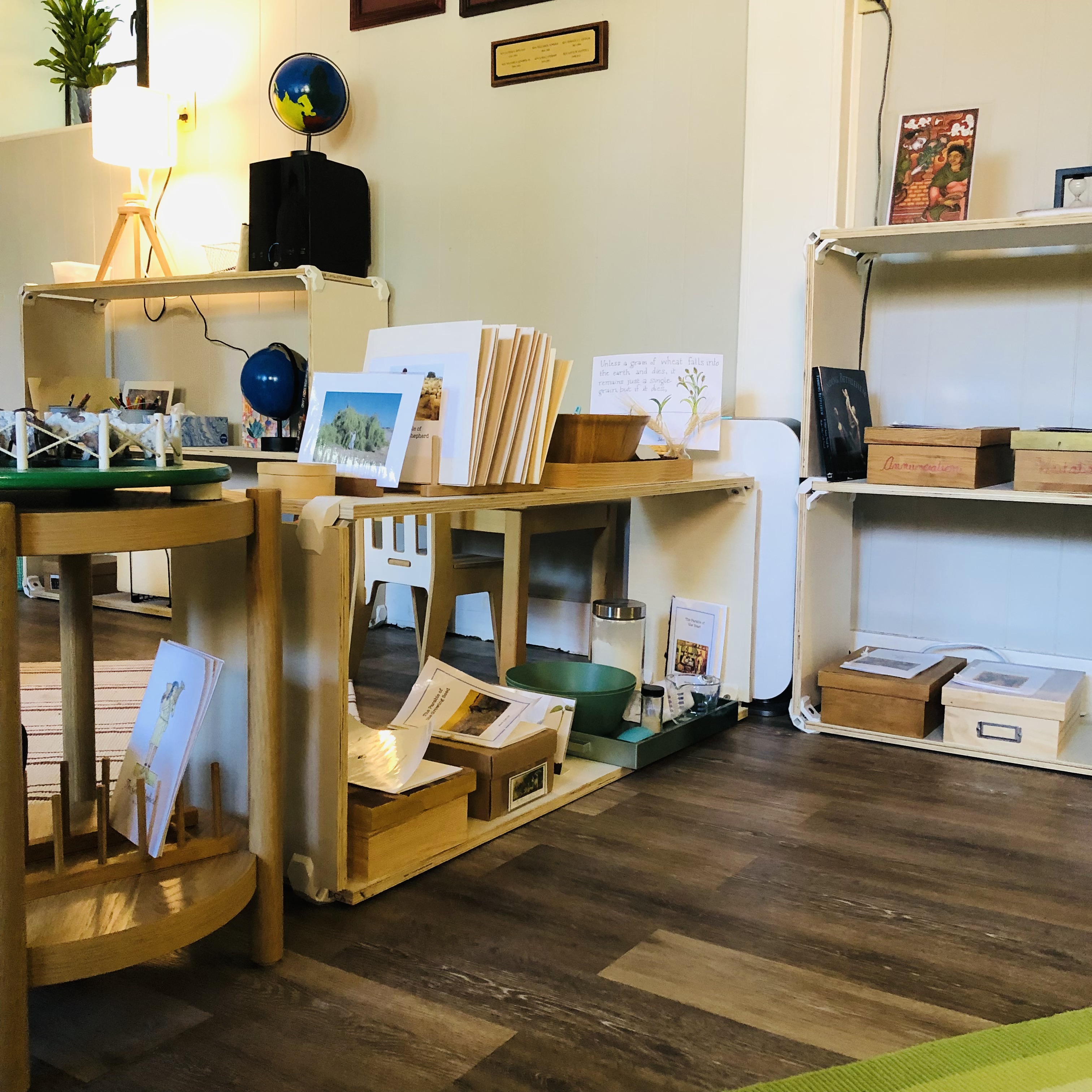
Thrift stores provide a wonderful selection of frames. We remove the glass for safety and have some of our more permanent images, like the Good Shepherd, hung on our walls. Local office supply stores or print shops who specialize in architectural printing can print your images to the size you need.
Further Reading:
We don’t endorse all of the views in these articles. We do appreciate their perspectives and the questions they raised.
Note: As educators we do not need to license an image for single usage. Unless noted by the artist, you may use it one time in your atrium as an educational setting, but you may not use it for marketing, reproduce it, or sell it. It falls under the “Fair Use” section of copyright law. “Fair use allows copying of copyrighted material in an educational setting, such as a teacher or a student using images in the classroom.” If you want to use the image in the bulletin and it is owned by a private museum, collector, or artist, you must email and ask for permission.
 The Inclusive Atrium